
The landscape for businesses operating in Kenya and across East Africa has shifted materially. What was once a voluntary framework discussion — business and human rights, responsible supply chains, ESG compliance — has become an institutional pressure with direct commercial consequences. International procurement standards, investor due diligence requirements, and the growing sophistication of civil society monitoring have combined to create an environment where BHR compliance is no longer a reputational nicety. It is a business necessity.
The companies that understand this earliest — and build the internal systems to demonstrate it — are the ones that will access international markets, attract institutional capital, and avoid the operational disruptions that regulatory exposure and reputational damage create. For Kenyan businesses with regional ambitions, the window to build these systems proactively, rather than reactively, is narrowing.
What the Kenya BHR Landscape Actually Requires
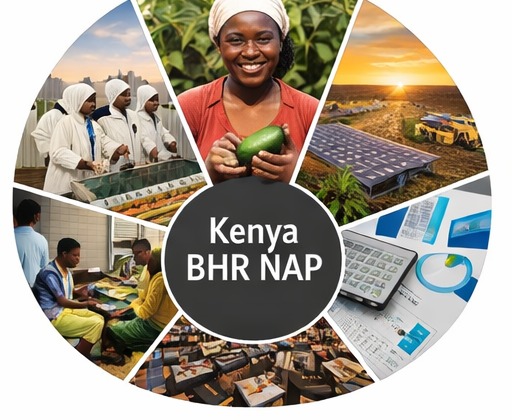
Kenya’s National Action Plan on Business and Human Rights established the domestic framework for state and non-state BHR obligations. The Strategic Litigation Guidelines on Business and Human Rights — developed in partnership with the Kenya National Commission on Human Rights, the Law Society of Kenya, and the Danish Institute for Human Rights — have created a practitioner infrastructure that civil society, regulators, and affected communities are increasingly equipped to deploy. This is not a theoretical risk. It is an operational one. Businesses in extractive sectors, manufacturing, agribusiness, construction, and financial services — across the value chain, not just at the level of headquarters — are exposed to grievance mechanisms, regulatory scrutiny, and strategic litigation tools that did not exist or were not effectively deployed five years ago.“The businesses that treat BHR compliance as a liability to manage will be perpetually behind the ones that treat it as infrastructure to build.”